
Lisa Miller’s Career Story
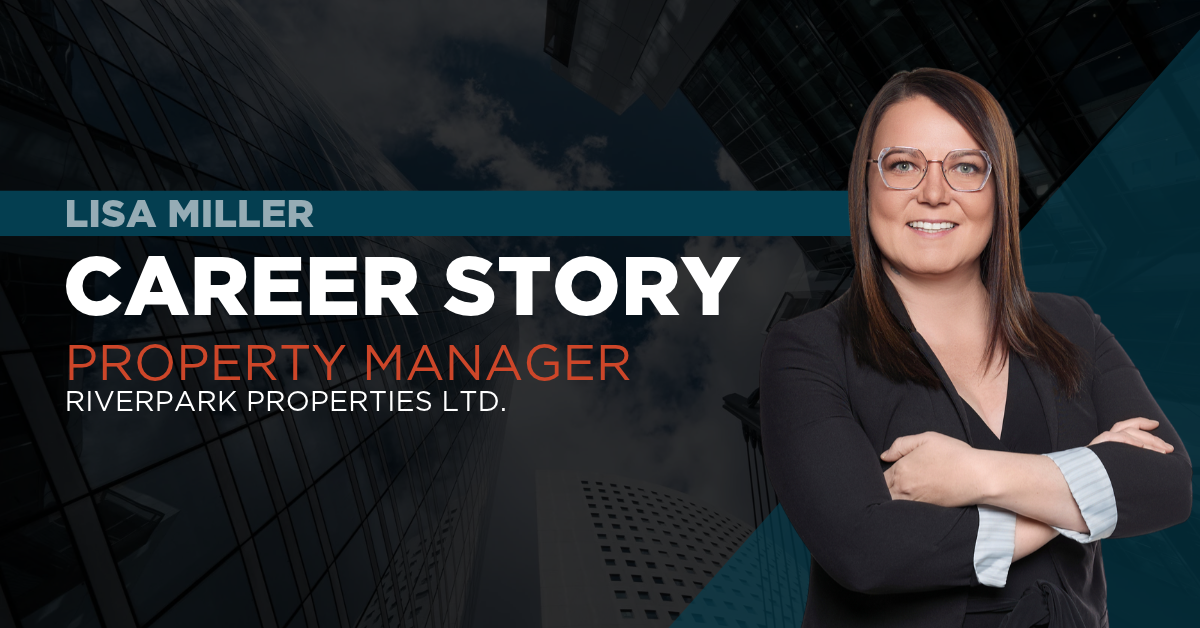
The Career Stories series features the professional journeys of a wide range of individuals across Canada’s real estate development industry. Often, these stories highlight how rewarding careers in real estate development are the result of following your interests, fostering personal and professional networks, and keeping an open mind about what a career in real estate development might be.
Meet Lisa Miller – Property Manager – Riverpark Properties Ltd.
How did you get started in your career?
I fell into property management completely by accident, and I mean that quite literally. In 2011, I suffered a significant leg injury that forced me to rethink what I was doing for work. My sister-in-law, who worked in property management, helped me get a temporary office position while I recovered. At that point, my career aspirations were simple: find a job where I could sit down.
What was supposed to be a short-term arrangement turned into an offer to stay permanently as a property administrator. I remember being genuinely curious about what property management involved. Like most people outside the industry, I had no idea how much happened behind the scenes of a commercial building. That curiosity turned into a career I couldn’t imagine not having. Would I recommend breaking your leg as a career development strategy? No. But apparently, it worked for me!
What inspired you to pursue this career path?
Initially, a broken leg and a sister-in-law with excellent timing! But what made me stay was realizing just how much opportunity existed in commercial real estate.
Property management is such an interesting combination of people, buildings, business, and problem-solving. One day you’re reviewing financials, the next you’re dealing with a flood, navigating a complicated tenant issue, or working through a capital project. It’s a career that rewards curiosity, adaptability, and the ability to remain reasonably calm when everything around you has decided to fall apart at the exact same time. As I progressed through various roles, I discovered that what I enjoyed most wasn’t necessarily the title or size of the portfolio. It was the opportunity to solve interesting problems, build relationships, and help people grow.
Who has been your biggest influence or mentor in your career?
I’ve been incredibly fortunate to have had several mentors throughout my career. One thing I discovered early on is that commercial real estate is full of people willing to share their knowledge and help others succeed.
I would be remiss not to give a shoutout to Kimberlie Garraway, with whom I worked with for ten years at ONE Properties. When we started working together, it was a perfect storm: I wanted to learn, and she was willing to teach. Kim gave me opportunities to work across different asset classes and increasingly complex portfolios. She trusted me with challenges that pushed me outside my comfort zone, and those experiences were instrumental in my growth. One of the most valuable things she taught me had nothing to do with buildings. It was accountability. When you’re responsible for a team, “that’s not my job” isn’t really something you get to say. Leadership means taking ownership, supporting your people, and being willing to roll up your sleeves when something needs to get done. She also taught me that you don’t need to have every answer, but you do need to care enough to help find one. That lesson has stayed with me throughout my career, and it’s something I try to pass along to the people I work with and mentor today.
What is one project or achievement you are most proud of?
Without question, being part of the team responsible for managing ICE District in Edmonton. ICE District was unlike anything I had experienced before, and I sometimes joke that I gained an entire career’s worth of experience during the five years I worked on that portfolio.
What made it so special was the complexity behind the scenes. We managed everything from office and retail space to public areas, shared infrastructure, and part of the pedway system (Plus 15 for all you Calgarians out there!). There were complicated ownership structures, major entertainment events, operational challenges, and more moving pieces than I could possibly count. It taught me how to navigate complex relationships, think strategically, manage risk, and understand how individual buildings contribute to something much bigger.
I had the opportunity to work alongside exceptionally talented people who cared deeply about what we were doing. Together, we were recognized as BOMA’s 2024 Property Management Team of the Year. That recognition meant a great deal to me because it reflected the people behind the scenes, doing what can often be considered a thankless job. Great property management is often invisible. When everything is working, people don’t necessarily think about the hundreds of decisions, conversations, and coordinated efforts that make it possible. ICE District gave me an entirely new appreciation for that work and the people who make it happen. It was challenging, occasionally exhausting, and never boring.
What advice would you give to someone starting out in the field?
First, put yourself out there! Commercial real estate is a relationship-driven industry, and some of your best opportunities will come from the people you meet along the way. Attend events, introduce yourself, volunteer for committees, and be curious about what other people do, even if it has nothing to do with your current role.
Be humble enough to recognize that you don’t know everything. I’ve been in this industry for over a decade, and I’m still learning. That’s one of my favourite parts of the job.
Be patient with your career. I love seeing ambitious young professionals, but there’s real value in taking the time to understand your role before racing toward the next title. Don’t confuse being ready for a promotion with being ready for the responsibilities that come with it.
And finally, take ownership of your development. I’m a huge advocate for mentorship, but I always remind people that your mentor can’t want your growth more than you do. If someone is willing to invest their time in you, show up prepared, ask questions, follow through, and actually do something with the advice they give you. People can guide you and open doors, but you have to be willing to put in the work.
Want to curate your career in real estate development? Connect with us to explore how our experiential, industry-connected programs can support your professional development at any career stage.